
elements of mindfulness.
There are thought to be five core aspects of mindfulness that anyone can develop:
Non-reactivity to inner experience: This involves the ability to observe internal experiences, such as thoughts, emotions, and sensations, without feeling the need to react or engage with them.
Becoming a Curious Observer: This is about tuning into what’s happening inside you right now. It’s like turning on a gentle spotlight to illuminate your thoughts, emotions, and body sensations, without trying to change them.
Acting with awareness: How often do you drive home or eat a meal without really noticing? This aspect of mindfulness is about fully engaging in what you’re doing, moment by moment. It’s the difference between sleepwalking through life/ being on autopilot and being truly present.
Finding Words for Your Inner World: Sometimes, putting a name to what we’re feeling can be powerful. This part of mindfulness involves describing your inner experiences. It’s like being a friendly reporter for your own thoughts and feelings.
Nonjudging of experience: We often criticize ourselves harshly or label experiences as “good” or “bad.” This element of mindfulness encourages a kinder, more accepting approach to whatever you’re experiencing. It’s not about approving everything, but rather observing without harsh judgments.
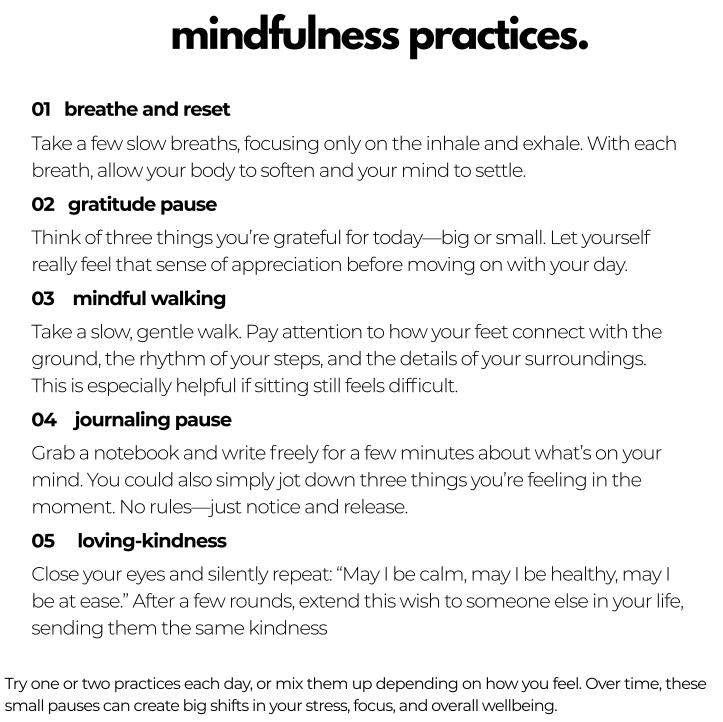
Mindfulness is a skill you can practice, and there are plenty of simple ways to begin. Here are some that can be incorporated into your daily life
guide to mindfulness.
mindfulness often involves simple techniques like.
Focusing on your breath . Observing your thoughts and feelings . Paying attention to physical sensations in your body .
Mindfulness meditation is a formal practice of mindfulness, and ultimately a formal practice of presence. The key principles of mindfulness meditation are non-judgment, patience, having a beginner’s mind, trusting oneself, being non-striving, letting go, and acceptance.
mindful activity.
Some simple strategies for practicing mindfulness may include mindful colouring, engaging in craft projects, completing puzzles, practicing yoga and even reciting positive affirmations.
Mindful colouring is a form of self-expression where we draw our attention to the present activity.
It has been shown to reduce stress, improve sleep, foster compassion and promote creativity.
We have put together some resources and ideas to help you navigate & discover your way to mindfulness:
In our busy, fast-moving world, it’s easy for the mind to feel scattered—pulled in every direction by endless to-do lists, notifications, and distractions. In fact, research shows that our minds wander almost half of the time, meaning we’re not fully present for a big part of our day. This is where mindfulness comes in. It’s about gently bringing your attention back to the here and now—without judgment—so you can feel calmer, clearer, and more connected.